
Therapy Groups
Healing doesn't only happen in therapy,
it also happens in relationships, community, and belonging.
Alongside one-to-one therapy, I offer therapeutic groups for autistic adults and those exploring whether they may be autistic. These groups are built upon the belief that when we feel understood, accepted, and able to be ourselves, meaningful change becomes possible.
The aim of the group isn't simply to learn more about autism. It's to experience what becomes possible when autistic people come together in a community where they feel safe enough to be themselves. Through shared experience, thoughtful reflection, and neurodiversity-affirming therapeutic support, members are invited not only to understand themselves more deeply, but to experience the healing power of authentic connection.
The BELONG Model
A therapeutic framework supporting autistic identity, belonging and growth.
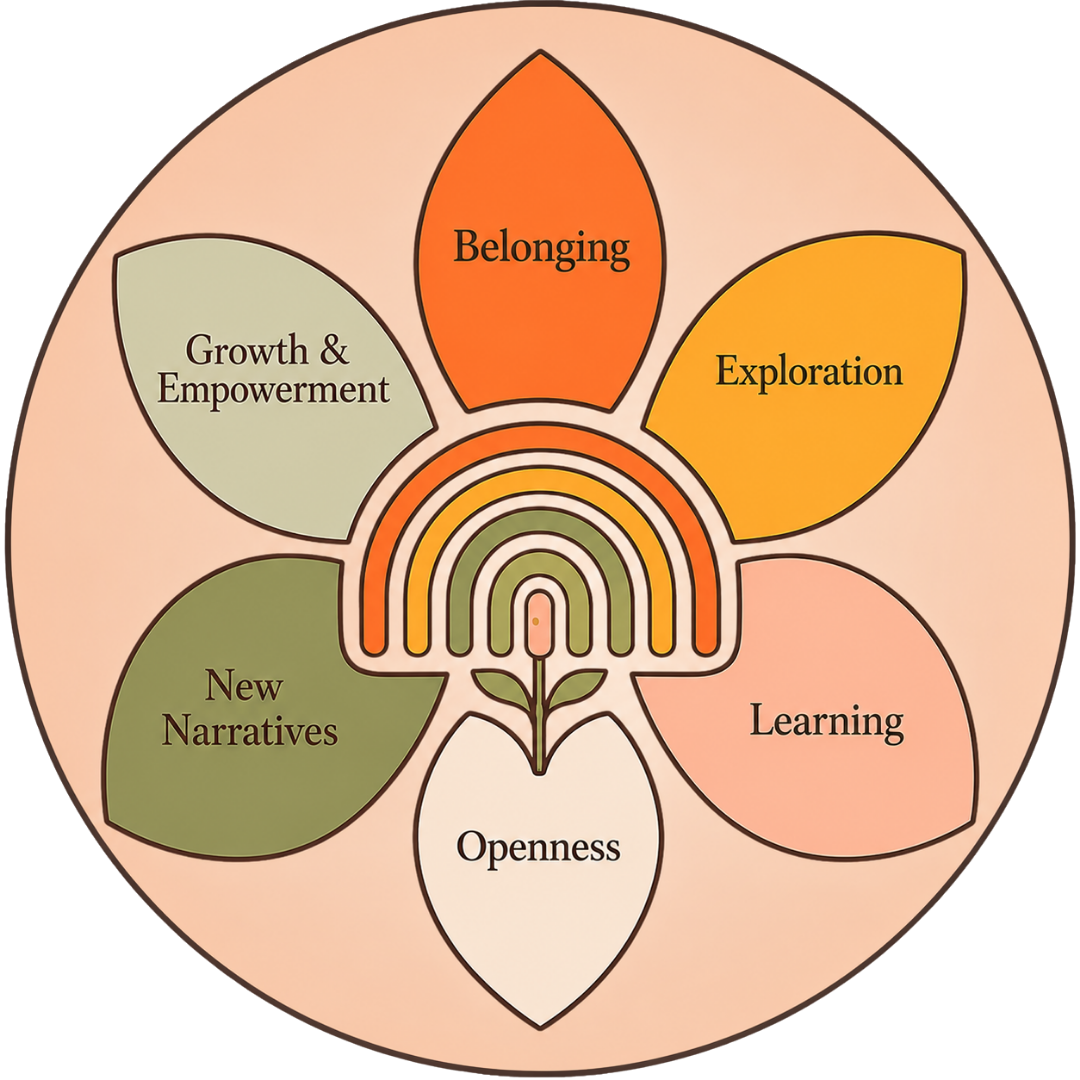
The BELONG Model sits at the heart of every group. Rooted in neurodiversity-affirming practice, trauma-informed care, and research into autistic identity and belonging, it offers a flexible way of learning, reflecting, and growing together.
Rather than following a rigid curriculum, each session evolves collaboratively, allowing psychoeducation and meaningful discussion to emerge naturally from the experiences and relationships within the group.

Thinking about a therapy group?
-
Group therapy can offer something different to individual work. For many autistic people, being alongside others who have had similar experiences can reduce feelings of isolation, soften shame, and foster a greater sense of belonging.
The BELONG Model sits at the heart of every group. Together, we explore both our inner worlds and our relationships with others, recognising that healing doesn't happen in isolation but through meaningful connection, shared understanding, and authentic community.
Each session weaves together three therapeutic strands:
Reflection – making space for whatever feels most important in the moment, whether that's something happening in your everyday life or something that emerges within the group itself.
Relationship – exploring how we connect with ourselves and one another, recognising that differences, misunderstandings, rupture, and repair are all natural parts of healthy relationships.
Learning – gently integrating neurodiversity-affirming psychoeducation where it feels relevant, helping members develop greater insight into their autistic experiences and reframe past experiences through a more compassionate lens.
Rather than following a rigid curriculum, the direction of the group develops collaboratively. As themes naturally emerge, so too does the psychoeducation, allowing learning to feel meaningful, relevant, and grounded in members' lived experiences.
Together we may explore topics such as masking, burnout, identity, relationships, sensory experiences, nervous system regulation, boundaries, self-advocacy, self-compassion, and authenticity, whilst also making space for whatever feels important in the here and now.
Many autistic adults describe never having had the opportunity to be fully themselves in relationship with others. This group offers a gentle space to explore authenticity, connection, and what it feels like to be seen, understood, and valued by people who truly "get it".
The aim of the group isn't simply to learn more about autism. It's to experience what becomes possible when autistic people come together in a community where they feel safe enough to be themselves. In other words, this group offers the opportunity not only to talk about belonging, but to experience it.
-
This is an ongoing online therapeutic support group facilitated by Dr Cloie Parfitt. The group combines relational therapy, reflective discussion, shared lived experience, and neurodiversity-affirming psychoeducation to create a space where members can deepen their understanding of themselves whilst building meaningful connections with others.
Rather than following a fixed programme, each session develops collaboratively. Members are invited to bring whatever feels most important to them, whether that's something happening in everyday life, a question about autism, a relationship difficulty, or a personal reflection. As themes naturally emerge, I gently weave in relevant psychoeducation, therapeutic insights, creative approaches, and practical tools to support deeper understanding and growth.
Relationships sit at the heart of the group. From the outset, we recognise that differences, misunderstandings, and moments of rupture are a natural part of being in community. Rather than viewing these moments as failures, we approach them with curiosity, compassion, and openness, recognising that repair can become an important part of healing.
Whilst there is never any pressure to share before you feel ready, this is a participatory group and members are encouraged to engage in ways that feel manageable, meaningful, and authentic for them. Every member brings valuable experiences, perspectives, and strengths that contribute to the wider community.
The group is open-ended, allowing members to remain for as long as they feel the group continues to support their wellbeing and personal growth. To foster safety, trust, and cohesion, members are asked to commit to attending a minimum of eight consecutive sessions before deciding whether to continue.
Occasionally, invited colleagues may join the group to offer specialist workshops or creative experiences relating to topics such as autistic identity, creativity, sensory wellbeing, or self-expression, enriching the group's learning whilst remaining grounded in the BELONG Model.
Places are intentionally limited to create a safe, thoughtful, and well-held therapeutic environment where genuine relationships have the opportunity to develop over time.
As the group's facilitator, my role is to help create a space where everyone feels safe enough to be curious, authentic, and connected. I draw on my experience as an integrative psychotherapist, researcher, and trainer specialising in autistic mental health to gently guide discussions whilst recognising that every member brings valuable insight, experience, and wisdom to the group.
-
This group may be a good fit if you are:
Autistic, self-identify as autistic, or are exploring whether you may be autistic.
Looking for a therapeutic community where you can feel understood, accepted, and less alone in your experiences.
Interested in developing a deeper understanding of yourself through a neurodiversity-affirming lens.
Exploring identity, masking, authenticity, self-acceptance, or what it means to live more fully as yourself.
Navigating burnout, chronic overwhelm, life transitions, or the lasting impact of feeling misunderstood.
Wanting to build more meaningful, authentic relationships with yourself and others.
Curious about understanding your nervous system, recognising your needs, and learning ways to support your wellbeing.
Looking to develop greater self-compassion, confidence, self-advocacy, and a stronger sense of belonging.
Open to participating in a reflective group where members learn with and from one another through shared experience and discussion.
-
The BELONG Model is the therapeutic framework that guides every aspect of the group. Together, these six interconnected principles provide a flexible structure for exploring autistic identity, relationships, healing, and growth. Rather than following a fixed programme, they offer a compassionate way of understanding ourselves, one another, and what it means to truly belong.
B — Belonging
Creating a space where you can experience acceptance, authenticity, and community without needing to hide who you are.
E — Exploration
Developing curiosity about yourself, your relationships, and your autistic experiences.
L — Learning
Integrating neurodiversity-affirming psychoeducation and lived experience to deepen understanding.
O — Openness
Recognising that authentic relationships include vulnerability, misunderstandings, rupture, and repair.
N — New Narratives
Reframing past experiences through compassion rather than shame.
G — Growth & Empowerment
Strengthening self-understanding, self-advocacy, confidence, and connection beyond the group.
Practical Information
When: Fortnightly on Mondays, 3:00pm–4:30pm (90-minute online sessions)
Beginning Monday, 23rd November
Group size: Maximum of 6-8 members
Cost: £35 per session
A deposit equivalent to two sessions (£70) is required to secure your place. This deposit covers your first and final sessions.
Members are asked to commit to attending a minimum of eight consecutive sessions to support safety, trust, and cohesion within the group.
Further information regarding fees, attendance, and group agreements will be discussed during the consultation process.
Joining the group
The group has a two-stage joining process to help ensure it feels safe, supportive, and appropriate for everyone involved.
Step One – Is the group right for you?
After registering your interest, you'll be invited to a brief consultation call with Dr Cloie Parfitt. This provides an opportunity to explore what you're hoping to gain from the group, ask any questions you may have, and consider together whether the group feels like the right fit for your current needs.
Step Two – Preparing for the group
If you're offered a place, you'll then be invited to a 30-minute one-to-one welcome session with Dr Cloie Parfitt before the group begins.
This session is designed to help us begin building a therapeutic relationship before your first group meeting. Together we'll explore anything that might help you feel safer and more supported within the group, including any communication preferences, accessibility needs, current life circumstances, or experiences that may feel particularly relevant as you join the group. It also provides an opportunity to discuss any questions or anxieties you may have about starting.
Ensuring the group feels safe for everyone
Because this is an ongoing therapeutic group, it may not be the most appropriate form of support for everyone at every stage of their journey.
This group is not a crisis service and may not be suitable for individuals currently experiencing severe psychological distress, active suicidal thoughts, significant self-harm, acute trauma symptoms, active addiction, or those requiring intensive or crisis mental health support.

Get in touch
If you’re interested in training or group work, you’re very welcome to get in touch.
Whether you’re looking for support as an individual, or exploring training for your team or organisation, we can have an initial conversation to understand what you’re looking for and whether this feels like the right fit.
There’s no pressure to commit, just a space to explore what might be helpful for you or your organisation.